About
A practice, not a course catalogue
I teach project managers, and I build the tools I teach with. Both halves are visible here on purpose — the method should survive contact with real work before anyone pays for it.
cat ./bio
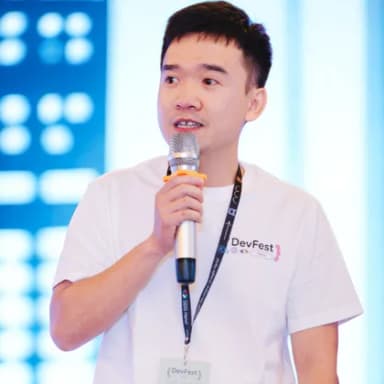
I’m Anh Vu. I came into project management from the factory floor — automation engineering — and spent 13 years in the space between the people who build things and the people who need them delivered.
That’s the gap most PM training misses. It teaches the vocabulary of delivery without the texture of it: what actually blocks a release, why the plan and the factory disagree, what a status report is for when everyone already knows the news.
cat ./method
Problem first, framework second.
A room doesn’t need PMBOK read aloud. It needs its own problems named, and then the smallest tool that answers each one. So a program starts with a survey of the people who will be in the room, and the frameworks show up as solutions to pains they have already described — not as a syllabus they have to sit through first.
Every session ends in an artifact the learner keeps: a charter, a RACI, a RAID log, a weekly RAG report on a project that is actually theirs. Each one feeds the next, so by the end they are running a real project on a working toolkit rather than holding a certificate.
cat ./case-study
IMC is a ~200-person health-supplements and cosmetics manufacturer in Hanoi, running new-product, market-entry and factory build-out projects across four teams with no shared PM discipline. Their HR team found me on LinkedIn and chose an independent specialist over a training centre.
I surveyed all four teams first. They independently named the same five problems: scope changing mid-project, one person juggling several projects, coordination gaps between departments, unclear decision ownership, and project information that never stayed in sync. The program was designed from that survey — three sessions over two days, onsite, each producing a real artifact.
On the post-course board, the PM approach itself scored +24 as “what’s new” and applying AI in PM scored +20 — the two standouts, across a room that mixed working PMs with leadership observers. That result is why AI is a layer through every stage of the path rather than an advanced module at the end.
ls ./built
PMPilot is a free PMP practice platform — 1,018 questions, every one of them explained, aligned to PMBOK 8 and the 2026 ECO. It went from first commit to live in 13 days, built solo with AI doing the work a small team would otherwise have done.
The study garden is the written half: the standard, the performance domains, the key concepts, maintained as a linked knowledge base rather than a slide deck.
Neither is the thing I sell. They exist because a PM practice that talks about AI leverage and can’t show any is just talk.
./work-together
In-house team training, and a public cohort for individual PMs. If you have a room that needs this, or a project that isn’t going the way the plan said it would, tell me about it — the form on the homepage reaches me, and I read every project people describe on it.